Saturday, December 26, 2015

Continuing the journey

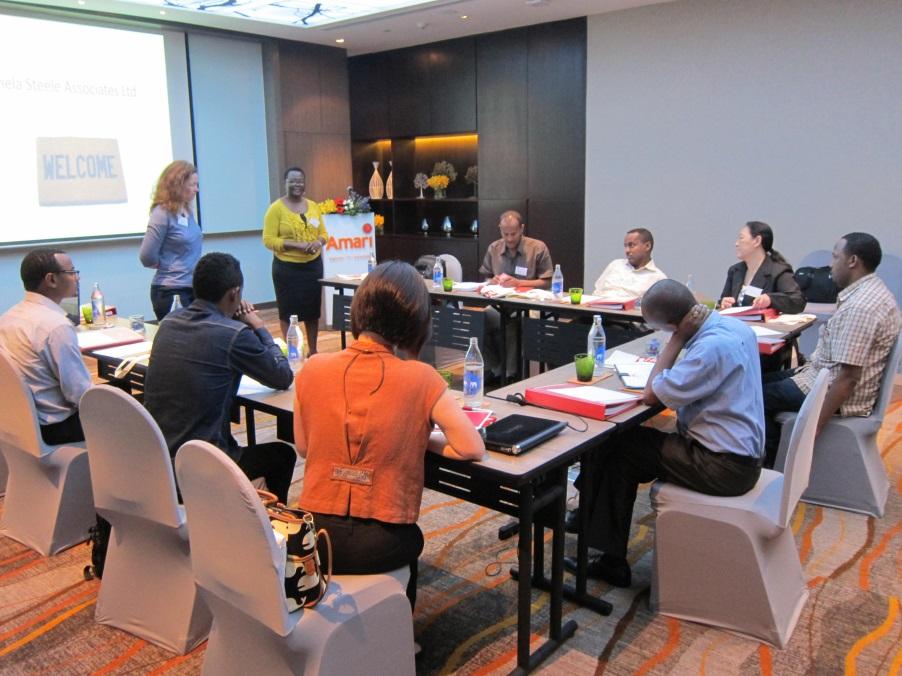
Pamela (4th from left) with trainer Giles Marion (far right)
and trainees at a recent PSA training event in Dubai

Dear friends, for over 4 years I've written in this blog about some of the people I've met and the places I've been in my work as a humanitarian and development supply chain specialist.

My first blog was called 'Humanitarian Logistics, a Career for Women' and since then my own career has moved on. In that time, I've moved from being a Supply Chain Capacity Development Specialist in UNICEF in Copenhagen, to starting out as an independent consultant before establishing my own limited company, 'Pamela Steele Associates' or PSA, in Oxford.

This blog is not my last, but you may have noticed that I haven't blogged here recently. Instead, I've decided to focus my attention on the PSA blog and newsletter. I hope you will continue to follow me there. I will preserve this blog as a record of the journey so far, for the happy memories it represents. But for future updates follow me on the PSA blog, the PSA Facebook page or sign up for our quarterly newsletter. See you there!

Monday, July 27, 2015

10 years on, has the Make Poverty History Campaign had any meaningful results?


In 2005, Nelson Mandela emphasised that extreme poverty could be overcome in the same way apartheid and slavery were. In the same spirit, the ‘Make Poverty History’ campaign was part of a massive push to tackle world poverty. Tens of millions of people demanded that their leaders deliver trade justice, increase and improve aid, and write off public debts of poor countries. We believed these issues were at the core of poverty.


On behalf of Oxfam I was selected to join a group of African women to deliver messages from the public to the British Prime Minster, Tony Blair.
Pam in gold coloured outfit in front of no.10 delivering petition
We walked proudly into Downing Street with traditional baskets balanced precariously on our heads. They overflowed with almost half a million petition signatures, making this the biggest petition ever received by a British Prime Minister.


Such a display of people power led to unparalleled pressure on G8 leaders to take decisive action at the Gleneagles Summit in Edinburgh. This resulted in a commitment to cancel debts owed to international financial institutions. Leaders also agreed to increase aid to less developed nations by $50 billion by 2010.

But 10 years on, what has actually been achieved?


Progress


With earlier programmes included, $97 billion in debt relief has been provided. 36 of 39 eligible countries have finished the debt relief process.


The most notable achievements have been in health and education. 10 African nations whose debts have been cancelled have witnessed astounding growth of 40% on education spending, and 70% on healthcare. As a result, 35 million more children across sub-Saharan Africa have been able to start primary education since 2005. Millions of children, girls in particular, now have the opportunity to learn to read and write. When school fees in Uganda were abolished as a result of debt relief, the number of children enrolled in primary schools more than doubled to over 5 million over the next four years. Further, through bringing together aid and domestic resources, the government of Mali has been able to employ over 20,000 new teachers.


In terms of healthcare, Africa received about $11 billion more in aid in 2010 than in 2004. This supported some life-changing, and often life-saving, expansion: of vaccine coverage; of major programmes targeting malaria, AIDS and tuberculosis; and of safe childbirth. In Zambia, debt relief replaced user fees for healthcare facilities in rural areas. As a direct result, visits to government facilities have increased by 50%. Prior to that, Zambia had been paying double in debt cancellation what it was able to spend on healthcare. In Sierra Leone, which has consistently had one of the highest maternal death rates globally, aid has made basic healthcare free for mothers and babies. This has led to nearly three times as many children attending health clinics.


Arguably the most profound change is in the perceived achievability of Make Poverty History’s mission. In 2005, many had resigned themselves to extreme poverty being permanent. However, 10 years on, the goal of ensuring that no person should live in absolute poverty by the year 2030 will be enshrined within the Sustainable Development Goals, to be signed by world leaders in September of this year. The reason for the new sense of possibility is that we are already halfway there.


Failures


While there are many causes for celebration, there have been missed targets and broken promises that have led to ongoing suffering and poverty. In 2011, according to the World Bank, over a billion people remained in extreme poverty. To take a specific example, there is still a long way to go in providing universal HIV/AIDS treatment. As of 2014, only 37% of people who need antiretroviral treatment are receiving it.


Such a terrible reality is partly due to the G8 falling far short of their combined promise of $50 billion in aid by the 2010 deadline. EU nations remain considerably off-track regarding their promise to dedicate 0.7% of gross national income to aid by 2015. The USA was the only country to fulfil its (very modest) pledge.


Instead of coming clean about this failure, the G8 have been accused of manipulating figures. Rather than adjusting aid figures for inflation, the G8 have used 2010 prices. This sleight of hand makes it appear as though they have delivered almost $49 billion instead of the accurate figure of $31 billion. This shortfall could have funded: school attendance for every child in the world; the salaries of almost 800,000 midwives in sub-Saharan Africa; and life-saving mosquito nets for 1 million people.


Concluding thoughts


Despite the negatives, back in 2005 public pressure led to powerful promises. Without these promises, it is certain that far less progress would have been achieved. The campaign demonstrated that ordinary people can make a real difference, particularly when G8 leaders are acutely aware of the world’s attention, and that setting ambitious anti-poverty targets is worth it. If we can achieve that level of progress again, we could be much closer to finally eradicating extreme poverty.


Pamela Steele is director and principal consultant at PSA Ltd, an Oxford-based consultancy working to strengthen national health supply chains in developing countries.


Monday, November 17, 2014

Three countries in three weeks

I'm relaxing back home in Oxford with my husband after three weeks of travelling to Copenhagen (26-30th Oct), Bangkok (2-8th Nov) and Brussels (10-13th Nov).

In Copenhagen I attended the very successful 2nd 'People that Deliver' (PtD) Global Conference on Human Resources in Supply Chain Management. This was by far the best managed conference I have attended. The program was well thought through and the range of speakers and the diversity of the participants was impressive with more than 120 participants from 20 countries. I learnt a lot from the discussions which were rich and fruitful.


C:\Users\Pam\Desktop\IMG_1965.JPG
'Supply Chain Capacity Development' training in Bangkok
Unfortunately I had to leave Copenhagen before the board meeting to fly to Bangkok, Thailand to run the PSA Health Supply Chain Capacity Development (SCCD) course. The
participants were great, they were engaged and the event was a success. I am always
humbled when after five days the participants go away feeling confident to
implement an action point or two.

One participant told me, “Now I am confident to work in a team designing a national supply chain capacity building. This SCCD training should be provided to higher level Health Managers having a say (executing SCCD activities and budget) on the health supply chain system.

From Bangkok I headed to Brussels to run a three day logistics and supply-chain course at HLA/AidEx 2014, an exhibition and conference dedicated to the supply of essential equipment
and services for long term humanitarian development aid and disaster relief. The AidEx
event attracts buyers from the global humanitarian aid community to exhibit their products.

After the training, I was able to visit some of the stands and witnessed many innovative products on display, including vehicles to withstand the terrain typical of the aid environment, water containers and shelter tents. I was most impressed to see womens' hygiene and dignity kits, which didn't exist until after the 2004 Tsunami disaster! I was able to reconnect with my former colleagues, Rod and Sean, from Oxfam at their stand where they served a delicious coffee to revive my spirit!

C:\Users\Pam\Desktop\IMG_3230.JPG
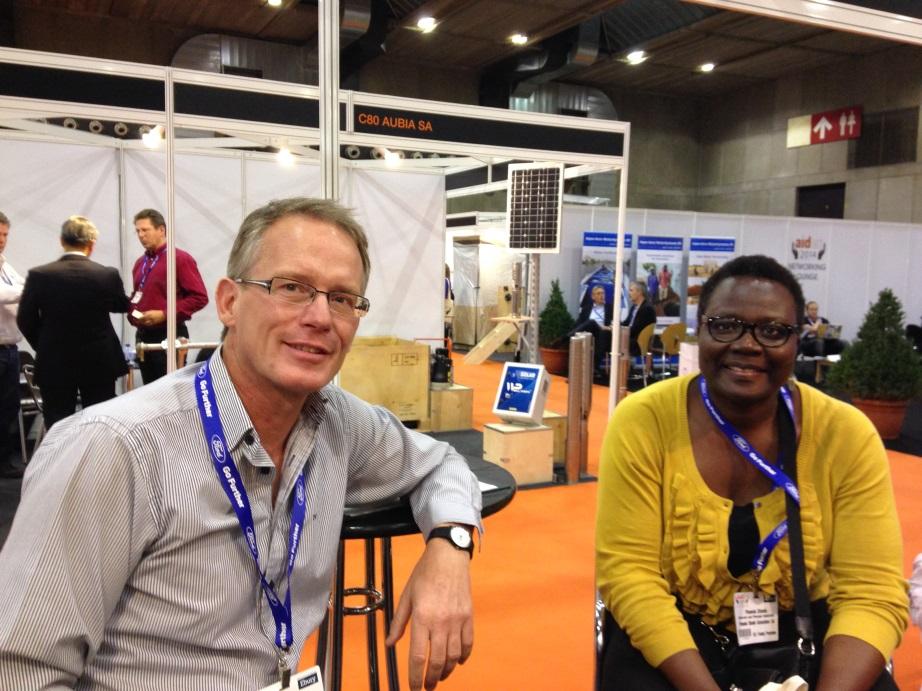
Pamela and Sean at HLA/AidEx 2014

Thursday, September 18, 2014

From Arusha to Bangkok!

Course participants, Arusha, Tanzania
Before (the course), I could not differentiate between Supply Chain Capacity Development and Technical Assistance, thinking both terms are the same’ one participant told me after PSA's recent SCCD training course in Arusha, Tanzania.

The training was held in the beautiful Kibo Palace Hotel in Arusha, Tanzania, which had very good facilities with great service from staff as well as having an excellent atmosphere for learning.

The 15 participants came from various countries and different organizations including RTI Envision Uganda and Mozambique; MSH/SCMS - Ethiopia; Pharmacy Council – Tanzania; NTD Control Programme IMA (TZ); ITI – Ethiopia and Atlanta; Christian Social Services Commission Tanzania and Central Medical Stores-Zanzibar. Everyone was fully engaged and able to relate the course material to the situations they face in their everyday work.

Part of the course covers terminology, including the difference between Supply Chain Capacity Development and Technical Assistance. Many people treat them as meaning the same but we recognise an important distinction.

Capacity Development is a longer term process during which individuals, organizations and society acquire and improve the skills and knowledge needed to reach their goals autonomously and on a sustainable basis. Capacity Development can include training but not all Capacity Development involves training.

In contrast, Technical Assistance is about individual(s) performing an expert function on behalf of, or instead of, someone else. So TA is about substituting capacity.

Participants receive course completion certificates
If you want to learn more about Capacity Development to strengthen your organisation’s supply chain then sign up for our next SCCD course to be held in Bangkok, Thailand from 3rd Nov-7th November 2014. Places are limited so don’t hesitate. I look forward to seeing you there.

Click here: SCCD bookings

Thursday, July 10, 2014

Supply Chain Capacity Development course launched

SCCD participants receive their course certificates
On June 23rd, PSA launched its new course in 'Supply Chain Capacity Development' (SCCD). SCCD is about managing change, taking a long term perspective. It is about strengthening the enabling institutional environment as well as the capacity of the individuals working in the supply chain.

After months of preparation, I was ready to train the first course participants at our office in Oxford. Some came from the UK but others travelled from as far as Nigeria, Syria and Lebanon. All came to learn a systematic approach to meet the growing demands on aid delivery for health system strengthening. I hope that everyone left with the confidence to embark on their own SCCD programme. 

Thank you to all who were there. We enjoyed lively discussions and were able to learn from each others experiences. In fact one trainee sharing about his organization’s emergency response operations in Syria, spoke movingly of his role, reminding us of why we work in the humanitarian and development sector. He highlighted the need for continuous learning to improve service delivery to those who are suffering.

I hope we will keep on touch. Trainees qualify as members of the Health Supply Chain Systems Strengthening (SCCD trained) Alumni group. For the next three months, I will be providing support to them as they return to their offices to work on their own SCCD programmes. 

The course is aimed primarily at senior managers, decision makers and other supply chain professionals. There is a global roll-out, and, in September, I'll be taking the course to Arusha, Tanzania. Click for the full schedule.

Hope to see you there! 

Book by August 1st to qualify for the discounted early bird rate.

Monday, May 26, 2014

Supply chain best practice seminars: Multimodal hears how smart thinking meets the ever increasing humanitarian need

I recently attended Multimodal Seminar 2014 at the NEC Birmingham, starting on 29th April, 2014. Multimodal, now entering its eighth year, is the UK and Ireland's leading freight transport and logistics exhibition. It features topical seminars and masterclasses, and hosts a Shippers' Village, giving freight buyers a private space to meet logistics suppliers. The seminars on 29th were organised in conjunction with the Chartered Institute of Logistics and Transport (CILT), and the Freight Transport Association (FTA)

The exhibitors represented all of logistics, and the software and hardware suppliers. It is where shippers, importers, exporters, manufacturers, wholesalers and retailers go to seek ways of running a slicker supply chain. The 2014 show broke all previous records with more than 7,100 visitors, nearly 300 exhibitors, an appearance by HRH Princess Anne, the patron of Transaid, and by Kevin Keegan, the legendary footballer who entertained at the VIP dinner. Transaid is an International development charity, championing local transport solutions for people in Africa and developing countries. 

Recent events, such as the Syrian Crisis and the Philippines hurricane, have highlighted the need for more focus on developing logistics and supply chain capabilities, enabling countries and economies hit by disaster to recover and move on. That's why it’s important to continue work in this area and to educate the public about humanitarian supply chain operations and its challenges. This CILT knowledge sharing event brought together key sector experts. A variety of themes were discussed, for example, Transaid looked at how team building can help save lives in the developing world. 

Mike Whiting, senior logistics consultant for the World Food Programme (WFP), chaired a seminar on humanitarian logistics on the opening day of the exhibition. He reported that aid costs increased by 430%  between 2004, the year of the Indian Ocean Tsunami, and 2013. Last year, half of those facing humanitarian needs were in conflict-affected areas, up from 25% 10 years ago. No fewer than four countries – Syria, the Philippines, South Sudan and the Central African Republic – faced maximum “level three” crises last year.

Seated from left to right: Mike Whiting, visiting lecturer in humanitarian logistics, Cranfield University, consultant at WFP and OCHA; Dorothea de Carvalho, professional development project director, CILT; Martijn Blansjaar, head of logistics and supply, international division, Oxfam; Chris Weeks, director of humanitarian affairs, DHL/DPWN 

Whiting said: “The system is having to deal with problems of increasing scale and complexity, which has profound implications. We need to find a more locally based, anticipatory approach – a more creative way of dealing with the logistics challenge that faces us.” He also said the institute could be  a catalyst for change. “We must listen to what those in peril want, not impose what we think they need,” he added.

Raising the status and enhancing the professionalism of humanitarian logistics, challenges and opportunities. 

Dorothea de Carvalho, CILT’s professional development project director, said people development was critical. More than 1,000 students have now passed through the institute’s certified qualification programme in humanitarian logistics, developed in association with organisations such as WFP, Save the Children, the Red Cross, Oxfam and UNICEF.

Logistics professionals can study for a humanitarian supply chain management qualification, while a specialist medical logistics practices strand (Medlog) is suitable for doctors or nurses needing to understand “the unique requirements of running a cold chain,” de Carvalho said. She urged  companies to sponsor students or offer work placements for graduates, to help benchmark their work against what was happening in the commercial sector. 

Martijn Blansjaar, head of logistics and supply, for Oxfam’s international division, said airlines offering cargo space to the charity had become fashionable in the 1990s, only to result in aid supplies failing to fly because the paperwork was not right.
Oxfam now benefited from fantastic long-term arrangements with JCB, which regularly supplied digging and lifting equipment, and British Airways, which could usually offer free capacity within  days of a crisis developing, Blansjaar said.

Chris Weeks, director of humanitarian affairs at DHL, said the company was helping disaster  preparations by helping airports in high-risk areas to be ready for a surge in incoming air freight. 

“The trick is to act smarter,” Weeks said. He contrasted the “old world” model of sending bottles of water, with today’s focus on purification units and jerrycans. “Disaster response is becoming more professional and co-ordinated. We’ve got to upskill and change the profile of our employees,” Weeks said.

Whiting concluded the seminar saying: “We can’t go on as we were, transformative logistics is needed. Training people in storage and distribution will control the amount of food wasted between harvest and end user. We have to go from tonnage-based to knowledge-based operations.” 

“Thinking more sustainably and helping people to help themselves can save a huge amount of long-term investment,” he said. He quoted an example from Tanzania, where at one time cola drinks were obtainable everywhere, but not essential drugs. Following collaboration between Coca-Cola and the Ministry of Health, medical supplies were now being distributed by those delivering the soft drinks across the country.

But the event wasn’t all trucks and bodies, DSV, a Danish company, was giving free food to the CILT  Knowledge Lounge. Having lived in Denmark, when I worked for the United Nations, I’m familiar with their fantastic cuisine. As soon as I spotted my favourite Danish herring, my mouth began to water, prompting my stomach to lead me to where all the human traffic was heading. 

You can guess what followed, and my humanitarian day out was smashing!
The evening ended with a wonderful roundtable discussion on key matters with Martijn Blansjaar, Dorothea de Carvalho, George Fenton (director for supply chain, World Vision International) and Dr  Silvia Rossi of Cranfield University, who also teaches humanitarian logistics and supply chain.

While humanitarian logistics is what I do, as well as building new connections, I also learnt something new about the CILT’s resources, both online and traditional, and that they can provide one-to-one services. I just need to sign up to benefit from the service.

Saturday, April 26, 2014

Facing breast cancer in the UK and in Africa

All of my past blogs have focused on many different topics surrounding poverty and the varied problems in our world, but this time I write about me personally. When I read about American actress, Angelina Jolie going public about her mastectomy in 2013 I never imagined I would go through a similar experience.

David and Pam wait for Pam to be taken to theatre
I was diagnosed with DCIS, early breast cancer, on August 8 2013, and had a mastectomy less than three months later, on October 21 2013. Since then I have been recovering slowly but steadily. In fact, just a month later, on November 18 2013, I was standing in front of third year engineering students at Oxford University, delivering a guest lecture on humanitarian logistics operations and innovation (you can read the blog on this below). Little did they know how conscious I was of my asymmetrical chest. But the thought of whether there are any women out there whose chests are totally symmetrical kept me comforted. I was only able to give the lecture, and see clearly that day because of the effective and efficient care I received from my oncologist at the John Radcliffe Hospital here in Oxford. Along with the wonderful support from my husband, daughters, church members, relatives and friends from all over the globe who supported me each step of the way. They kept me positive, strong and brave enough to face it all.


I consider myself very fortunate to live and work in Britain where cancer detection and treatment is so advanced. Right from the day I was diagnosed, the care had been professional and carefully handled. From the mammogram tests to biopsies to surgery and after care. And you know what?  There was no charge.

When I first heard my diagnosis, I was so sad and shocked my brain felt like a frozen ice cube, but not angry to ask “why me?” – because why should it be anyone? Of course, I worried about dying and leaving behind my children and my husband, who I want to grow old with. I also worried about not being there for my mother and family in Kenya.

I would not have made the journey without a positive attitude, and those who supported me. They sent emails, cards, flowers, texts and rung to hear my voice, and those who live in England visited me in hospital and at home after being discharged. But above all it was the quality of the health care that I was able to receive. My oncologist, nurse and GP still follow up to check that I am recovering well, and, yes, I am, and fortunately my cancer had not spread to other organs.
Pam recovering in hospital


In fact, in February 2014 I was able to make my first trip abroad since my surgery, to Copenhagen for work, and last week I travelled to Paris to attend the humanitarian logistics general assembly and summit (oh, I should blog about the Paris trip next!). It was wonderful to reconnect with senior logisticians, heads of humanitarian logistics operations (from various aid organizations) and Humanitarian Logistics Association Board members, and catch up with how they have managed with being so busy over 2013, responding to major disasters of the year; the Syrian Crisis  and the Philippines hurricane  just to mention a few. It was good to learn of the humanitarian challenges ahead and the things that keep logisticians awake.

But why blog about this? It’s because my experience reminded me of the situation of the many poor people in this world who struggle to access even the most basic healthcare. Particularly those in developing countries who, when diagnosed with something like cancer, would face a certain death sentence. During my illness, I read some sad stories of poor women in Africa who could not find help when they were diagnosed with breast cancer, as their relatives would not even let them talk about it. In fact, some were told to consider visiting traditional healers; in the meantime the tumours would grow and burst. A horrific experience that no one should have to go through. During that time, I also read that a key breast cancer drug, herceptin, cost USD 1,600 per patient per month. And I wondered how on earth people who can barely put food on the table afford this? My own experience, and these people’s experience, put into perspective the importance of my research in public health supply chains. 

My cancer being caught early, the appropriate quality treatment beginning without delay, and at no cost to my family, are the reasons why my hopes were rekindled. I would like poor people in low- and middle-income countries to one day also be able to have the kind of care I received. This is why I’m calling upon national government policy makers to do more for their people, and improve healthcare financing. Starting with setting up cancer screening equipment at district levels, train all of their nurses to know how to use the equipment, and lastly to make testing completely free of charge.


And to any one reading this blog, especially women, please take the first step to go for breast cancer screening, as an early diagnosis can help save your life. This was my experience when I felt a tumour on my left breast and decided to visit my GP. The rest is history. If I had not moved as fast, I may have been writing a different story or none at all.

Tuesday, November 19, 2013

Bringing the voice of the end user into the product design at the earliest stage

Engineering students, Oxford University

Recently, I was invited to talk to a group of Oxford University engineering students about solar cookers. I am not an engineer nor qualified to speak on technical issues, but I felt that I could be a voice for the beneficiaries in developing countries. A key to the success of a product is the early involvement of the intended end user in the design process.

I often visit my family in Kenya. My relatives in Nairobi welcome me with a traditional meal of chicken, beef, vegetables, rice and ugali. The food is cooked by the women over a cylinder gas cooker, a table-top electric hob or a paraffin stove.

After Nairobi, I return to my childhood home, Uboro, a rural village in Nyanza Province far from the nearest city, Kisumu. I love the freshness in the air. Over time, much of the surrounding area has been cleared for farming, but the land has been degraded. The soil is easily washed into the river ‘ugege’ from the hill where I collected firewood as a child.

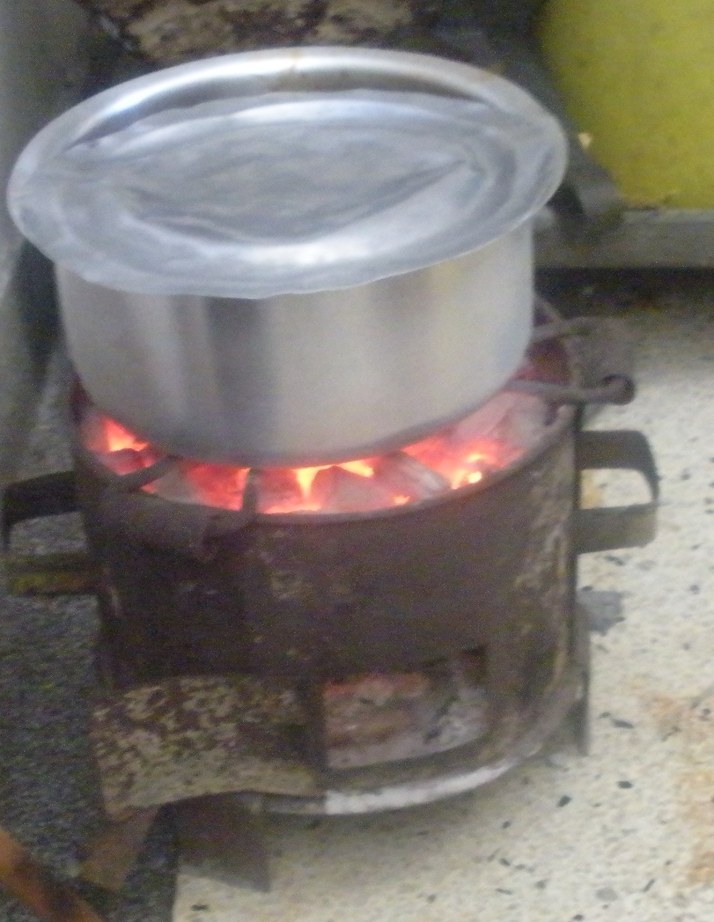
Kenyan Jiko, photographer AH


My elderly mother serves food cooked using the traditional three stones and firewood or, when there is charcoal, on traditional charcoal stove called a jiko. The Jiko is used sparingly to save on the cost of charcoal but, in her old age, my mother is not strong enough to gather firewood for herself.  She uses some of the little money I send her to buy firewood from the market.

African evenings can be chilly so, as a child, I loved to sit round the fire with my siblings while my mother cooked a simple meal and shared her wisdom with us. The smoke from the kitchen brought tears to our red eyes which only stopped when the food was ready to be served!

Cooking food in a solar oven could reduce the need for fuel and so reduce the burden on women to gather wood or pay for expensive sources of fuel. It would also reduce health hazards for women labouring for so many hours over a fire and for their children who accompany them.

Solar cooking is an environmentally friendly technology that could contribute to the solution, provided that the technology is accepted by end-users and that the solar ovens are both appropriate and affordable. However, it is important to understand a community’s way of life and traditional practices before deciding on what’s good for them.

Currently there are many efforts to design an appropriate solar cooker; some are already being marketed or distributed. There seems to be a race to be the first to get the product to market regardless of whether it is culturally acceptable.

It is important to appreciate that African families come in different sizes, and that cooking pots will vary according to family size and the types of food being prepared. Like others, Africans prefer to cook inside the house. The fire warms the house for those who would use the kitchen later as their bedroom, and the smoke, it is believed, kills the insects that invade a muddy grass thatched kitchen. Those without fridges use the smoke to dry food so that it does not go bad. The intended user of a solar oven MUST be involved in deciding what would be culturally appropriate in their situation.

The Albedo Solar Oven, one of a number of design concepts by the ISIS-Dytecna partnership

 Right now, there is much innovation in the humanitarian and development sector. In fact, innovation is a strategic priority of many aid organizations. Several UN agencies such as the WHO, UNICEF and UNHCR have their own innovation units. Domestic governments in developing countries are recognizing the need for innovation in the public and social sector to improve services. Individuals are also busy making their contribution, thanks to modern technology. But key to innovation is to ensure citizen participation in researching novel methods, especially from intended beneficiaries!

I commend the Oxford University students for engaging with someone with first-hand experience of the context and the people’s way of life, even if their current assignment is a paper exercise. It is my hope that when they complete their studies and get to apply their knowledge, they will remember to involve the intended customer or beneficiary!

Sunday, November 3, 2013

Research into the medicine supply chain in developing countries

Cranfield University gave me the opportunity to study a subject close to my heart. I spent over one year researching in-country supply chain factors that affect medicine availability at service delivery points in developing countries. In this short video I share my motivation for the topic and my plans for future research.

I hope you enjoy the video and leave your comments on the subject. I am available to work on short-term research contracts through PSA Ltd.


Friday, July 19, 2013


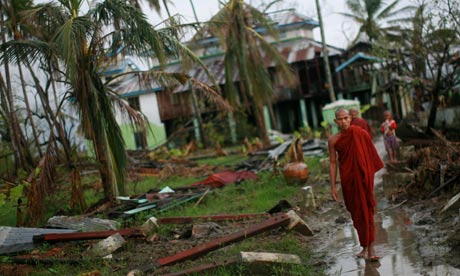
A monk walks by his damaged monastery, at the isolated village of Mingala Taungtan in the Ayeyarwaddy delta, Burma. Photograph: Getty Images

Saturday, April 20, 2013

The Politics of Humanity


Recently, I had the opportunity to hear John Holmes (UN Under-Secretary–General for Humanitarian Affairs and Emergency Relief Coordinator between 2007 and 2010) speak in Oxford on ‘The Politics of Humanity’,  an honest evaluation of the world of humanitarian relief aid based on his recent book of the same name.
John Holmes in Oxford
John spoke of his experiences of missions to Sri Lanka, Darfur, and the DRC Congo and the challenge of being an emergency relief coordinator. ‘What was he supposed to be coordinating? The International humanitarian set-up is not a ‘system’ in any recognizable sense. Rather it is a collection of organizations and groups which have, over the years, been morally impelled to alleviate the world’s misery’. As the overall emergency relief coordinator, he had no authority to command the aid organization to do things in a certain way. His job was made more difficult by the diverse nature of humanitarian aid organizations with different mandates.

He saw crisis from both sides: the reality on the ground in some of the bleakest places on earth, as well as the strategic view from a comfortable diplomatic chair. He revealed the difficulty of being true to humanitarian principles, particularly in conflict settings where governments tried to use humanitarian aid for their own political aims. ‘Humanitarian relief must not be used for political or security purposes, still less withheld for such resources, or manipulated in other ways. Humanitarian aid is a moral imperative, not part of anyone’s stabilization strategy’.

In closing, he stated that of we must invest more in disaster risk reduction to have a reasonable chance of keeping pace with the growing need otherwise the world may face huge catastrophes without the means to tackle them effectively.

I recommend his book to anyone wanting to learn more about the challenges of applying humanitarian principles in a political world.


Wednesday, March 6, 2013

Heriot-Watt University Edinburgh

Occasionally, I'm invited to speak to an audience on humanitarian logistics which gives me the opportunity to meet new people and visit new places I might not otherwise see. An invitation from Kate Hughes to speak to MSc Logistics students at Heriot-Watt University Edinburgh was one such opportunity.

Pam in Edinburgh
I was fascinated by the beauty of Edinburgh, this being my first time to visit Scotland, and what it had to offer: great hospitality, stunning scenery, and a rich cultural heritage.

Having a guest lecturer can give students the opportunity to hear from those with long-term experience in disaster response and humanitarian relief giving personal insight in to the unique challenges of this area of logistics and supply chain. I was able to share with the students my professional experience in humanitarian logistics in Africa, as a woman and as a 'local': the advantages and the challenges, and to share about my studies.

I was delighted to meet a diverse group of students who listened keenly and asked important and intelligent questions. I have always found the opportunity to exchange with students to be of mutual benefit where both parties gain from the ensuing discussions.

Saturday, July 14, 2012

Derek and me

I'm in the MAG (Mines Advisory Group) office with 'Derek' the deminer in full gear. MAG is a world leader in the clearance of landmines, unexploded ordenance and leftover weapons.

Pam and 'Derek'
Early in my career I worked for World Vision in southern Sudan where some of the ground was filled with landmines. I recall an incident when a convoy of trucks that I had dispatched to Bahr el Ghazal with seeds and tools hit mines. Some convoy members lost their lives and others were badly hurt and lost limbs. That was when I came to understand the devastating nature of this hidden evil.

This week my colleague, Gilles Marion, and I were in Manchester to provide consultancy for MAG. We were privileged to hear a presentation by CEO, Nick Roseveare, on his recent programme visit to DRC which gave us much insight.

What appeals to me most about MAG is the humanitarian aspect of their work. Removing the mines impacts whole communities by restoring safe access to water, shelter, food, and provision of emergency aid and essential life-saving information. People can walk without fear to fetch water from rivers and children can go to school and play in the fields once 'owned' by landmines.

I hope that our consultancy over the next three months will contribute to the impact of MAG worldwide.


Monday, July 9, 2012

Half way to the finishing line

Pamela at Cranfield University
Last week was a significant time for me and my colleagues on the doctoral programme at Cranfield University. We have reached the half way point in our studies which began in Autumn 2010.

We took stock of where we are by answering several questions: what have we learned; what challenges and successes have we experienced and what are our hopes for the next two years.

In that time I have learned to work with a more  structured approach; I have improved my academic rigour and been able to apply some of my research in my work as a consultant. 

The challenge has been to maintain a balance between family, work and studies while relocating from Denmark to the UK to start my consultancy. I thank God for my wonderful supportive husband who recently completed his own studies to gain an MSc from Oxford.

I am still motivated by the topic I am researching about the medical supply chain in developing countries and there has been much interest and support from practice. I began my studies to fulfill a lifelong ambition to research something in depth that would have an impact in people's lives. Now that I am midway through my doctoral studies I hope I will remain focused and motivated to stay the course.

Friday, June 22, 2012

UNFPA capacity building at Windhoek, Namibia (11-22 June 2012)


I had a wonderful opportunity to be a workshop trainer and facilitator at the UNFPA capacity building event in Windhoek, Namibia. Participants came from UNFPA offices across Africa, representing programme and operations functions.

The PSB (Procurement Services Branch) team from Copenhagen led the training on procurement systems and procedures while I focused on supply chain and logistics, with an emphasis on in-country logistics.

My training promoted pro-active interaction between the programme and support functions. Huge benefits can be realized when people are encouraged to break down barriers and work together rather than in silos. Programme efficiency is improved when logistics and supply chain elements are factored into programme planning, programme budgets and donor proposals. My message was reinforced by a simulation exercise which participants really appreciated.

I enjoyed being in Namibia, a beautiful country, and to be working with a great team from PSB: the Africa procurement team leader, Ms. Ingergerd, and her colleagues Peder, Lidia, Lauren, Sandra, and Karen.

Thursday, June 14, 2012

UNFPA workshop for the Ministry of Health, Sierra Leone


Pamela with workshop participants
I had a fantastic week in Sierra Leone (28th May to 3rd June) to co-facilitate a UNFPA 'Procurement and Logistics' training workshop with Karen Rasmussen for the Ministry of Health. The workshop even earned a mention in the national press!

The opening ceremony was attended by the Director of Drugs and Medical Supplies, Ministry of Health and Sanitation, Mr. Bassie Turay, the Deputy Director of Drugs and Supplies, Mr.Jack Lansana, and the UNFPA country representative for Sierra Leone, Madam Ratidzai Ndlovu. Procurement officers responsible for health commodities came from various institutions including the Procurement Unit in the Ministries of Health and Sanitation, and Defense and the National Procurement Authority. I was so encouraged to exchange knowledge with participants who were so engaged and keen to learn.

My Sierra Leone trip ended with a beautiful reunion and a surprise beautiful breakfast prepared by my former UNICEF friends Dorothy, another Dorothy and Farajah! Wonderful ladies…..thank you for the friendship and hospitality.

The Standard Times

Monday, May 14, 2012

"Humanitarian Logistics" by Rolando Tomasini and Luk van Wassenhove


"Humanitarian Logistics" by Rolando Tomasini and Luk van Wassenhove is one of the books in my list of recommended reads (see right). It's an excellent introduction to the subject for anyone looking for an introductory text and practitioners may find something to interest them also. 

I was please to have my review of the book included in  this months "Journal of Humanitarian Logistics and Supply Chain Management". You can read it by clicking here or using the URL below. Unfortunately access is restricted to subscribers only.

Tuesday, May 1, 2012

With Beatriz in Lund, Sweden

Meeting Beatriz in Lund, Sweden
This week I met up with a good colleague of mine, Beatriz Ayala-Ostrom, at her beautiful home in Lund, Sweden. Beatriz works as a consultant specializing in Health Systems Development and Procurement and Supply Chain Management. Recently we worked together to develop training materials for a client in London.

Beatriz has previously worked as a Research Fellow for Cranfield University and I was grateful for her advice regarding my research into Health System Supply Chain Management in Developing Countries. You can find Beatriz on LinkedIn .

Thursday, March 29, 2012

2012 Conference on Health and Humanitarian Logistics, Hamburg

Pam and Burcu 
I have just returned from Germany and the Hamburg conference on Health and Humanitarian Logistics. The conference brought together stakeholders from practice, academia and the private sector as well as students. I was delighted to meet many familiar faces along with others I was meeting for the first time. I was most delighted to meet academics whose journal articles have informed my research studies in humanitarian and public health supply chain and who generously offered me advice to help shape my thinking as a researcher. I was fortunate to put names to faces and meet Professor Prashant Yadav and Assistant Professor Burcu Balcik.

Prof Prashant Yadav
Prashant Yadav is a Senior Research Fellow and Director of the Healthcare Research at the William Davidson Institute at the University of Michigan. Yadav is a leading expert on pharmaceutical and healthcare supply chains in developing countries so I was excited to meet him. His research explores the functioning of healthcare supply chains in developing countries using a combination of empirical, analytical and qualitative approaches.

 Burcu Balcik is currently an Assistant Professor of Industrial Engineering at Ozyegin University (Istanbul, Turkey). Her research focuses on developing mathematical models and analytical tools to improve the design and management of humanitarian relief systems. Her work addresses various topics including strategic network design, last mile distribution, performance measurement, and coordination. I encourage practitioners to read her work to inform practice, particularly her work with Beamon on performance measurement in humanitarian supply chains published on International journal of Public Sector Management, Vol 21, No 1, and measuring supply chain performance published on International journal of Operations and Production Management, Vol 19, No 3.

 I'm looking forward to more engaging discussions in 2012.

Tuesday, November 29, 2011

Humanitarian Logistics Forum, Hull University

Delegates at the Humanitarian Logistics Forum
I feel very positive after attending the two day Humanitarian Logistics Forum (28+29 Nov) at Hull University Business School.

The meeting brought together around 30 senior practitioners and academics and focused on the logistics skills and capabilities needed to to enable post-disaster recovery and to lay the ground for future economic development.

Pam (right) and Gyöngyi Kovács
at the Hull University,
Humanitarian Logistics Forum, 2011
The conference was truly international with participants from North America, Australia, Scandinavia, the UK and more locations than I can remember. It was a great opportunity to network and to share experiences and  ideas. The meeting concluded with ideas for a research agenda and a white paper will follow shortly.

The event was sponsored by Cocal Cola and chaired by Emeritus Professor of Marketing & Logistics, Dr Martin Christopher of Cranfield School of Management, Cranfield University.